Bolivia luxury travel demand 2026: when peak seasons collide with limited rooms
Bolivia luxury travel demand 2026 is already reshaping how affluent travelers plan every journey. As the Bolivian government rolls out targeted marketing campaigns and infrastructure upgrades to attract high-spending visitors, US and European tour operators report sharp inquiry spikes for itineraries that combine La Paz, the Uyuni Salt Flats and Lake Titicaca in a single high-altitude loop. For anyone ready to travel Bolivia in style, the message is clear and increasingly urgent.
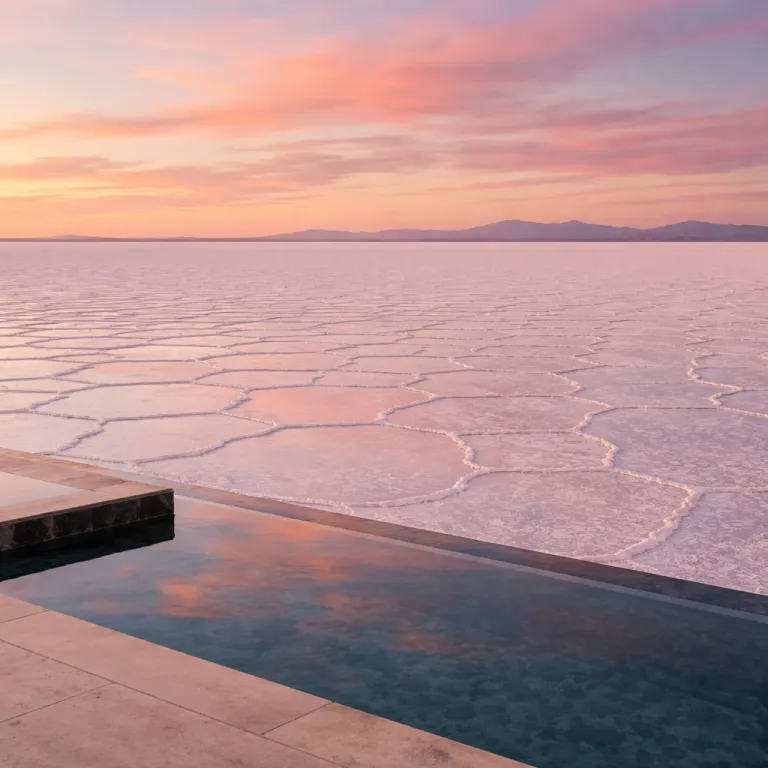
The heaviest demand now clusters around the mirror season on the Salar de Uyuni, when thin water layers turn the Uyuni salt crust into a South America sky reflection and create the images that first put Bolivia on the luxury travel map. Those same months align with the best time for clear skies over La Paz and for trekking circuits that link the Andean valleys with Lake Titicaca and nearby national park extensions, allowing travelers to pair city stays with wilderness experiences in one seamless trip. This convergence means that a single time visit window now drives pressure across every premium hotel in La Paz, around Lake Titicaca and on the edges of Salar Uyuni.
At altitude, capacity is finite and unforgiving, and Bolivia offers far fewer true luxury properties than neighboring Peru or the Sacred Valley around Cusco and Machu Picchu. Kachi Lodge, the design-forward camp on the Uyuni Salt Flats, operates with a small cluster of geodesic domes (the lodge publicly lists six guest domes on its official materials), so even a modest rise in high-end demand can sell out entire weeks for private buyouts or small groups. Travel designers at Black Tomato, Scott Dunn and Jacada now advise clients to start planning at least nine to twelve months ahead for any high-altitude itinerary that includes Salar Uyuni, La Paz and a cross-border extension to Machu Picchu or the Sacred Valley in Peru.
Global data reinforces this shift, as the global luxury travel market size for the mid decade is projected at around 1.48 trillion USD, with an average luxury trip spend per person of roughly 8,200 USD according to Peters Signature Travel’s 2024 luxury travel report and corroborated by industry summaries from Statista and Allied Market Research. Within Latin America, Bolivia is positioning itself as a less crowded alternative to classic South America circuits, allowing travelers to trade volume for depth while still accessing marquee names like Machu Picchu and Lake Titicaca through smart routing. For business-leisure guests who split time between meetings in Santa Cruz or La Paz and a private escape to the Salt Flats, this surge in upscale interest around 2026 means that flexible dates and early deposits now matter as much as room category.
Affluent travelers, the Bolivian government and luxury travel agencies are converging around the same objective set, as summarized in one internal assessment: "Growing interest in Bolivia as a luxury travel destination" and "Attract high-spending tourists" and "Boost local economy" and "Promote Bolivia's unique attractions". That alignment is already visible in how new high-end hotel projects in Santa Cruz and La Paz are framed, with an emphasis on cultural authenticity layered over international service standards. For readers who want a deeper city-specific view of where to stay in the capital, our guide to the best hotels in La Paz details which addresses are handling this surge with the most grace.
From salt flats to La Paz: which properties will sell out first
On the ground, rising interest in Bolivia luxury travel for 2026 is most visible where capacity is smallest and the landscape most extreme. Kachi Lodge on the Uyuni Salt Flats, with its six geodesic domes and a focus on immersive Andean experiences, is already seeing peak-season blocks held by international travel designers months earlier than in previous booking cycles. One specialist agency reports that for the last mirror season, more than 80% of Kachi Lodge inventory was committed nearly ten months out, a lead time drawn from its internal booking analysis and one that would have been unthinkable five years ago. Similar patterns are emerging at high-altitude properties around Lake Titicaca and in remote national park gateways, where even a handful of extra reservations can close out an entire time visit window.
In La Paz, premium hotel inventory remains tight, especially in the Zona Sur and Sopocachi districts where business-leisure travelers prefer to stay. As upscale demand for Bolivia rises, top-tier suites with private terraces and oxygen-enriched rooms are the first to go, particularly for guests connecting from Peru after visiting Machu Picchu or the Sacred Valley and needing a softer landing at altitude. Our analysis of booking data from luxury travel agencies indicates that travelers who want specific room types in La Paz during mirror season or major cultural festivals should secure reservations six to nine months ahead, with some operators now reporting average lead times of more than 200 days for peak dates based on their own reservation systems.
Beyond the capital, Santa Cruz is emerging as a low-altitude counterpoint for travelers who want to balance the thin air of La Paz and the Salt Flats with a more tropical experience. High-end hotels here are benefiting from Bolivia luxury travel demand 2026 as itineraries stretch to include both business meetings and leisure days by the pool, often before or after a journey to Salar Uyuni. This multi-city pattern is especially strong among travelers from North America and Europe who read about Bolivia as a rising luxury travel destination and then ask their travel designers to build in both urban and wilderness experiences.
For guests focused on sustainability, the same demand spike is accelerating interest in properties that integrate local communities and reduce impact on fragile salt and Andean ecosystems. Several high-end camps near Salar Uyuni now limit vehicle movements on the flats, offer private stargazing instead of large group outings and work with Indigenous guides to interpret the landscape. As one lodge manager notes, "Our guests want the mirror effect and the Milky Way, but they also want to know their visit is helping protect this place." These shifts align with broader global trends toward meaningful, personalized experiences and are explored in more depth in our analysis of sustainable trends in luxury hotel booking in Bolivia, which is essential reading for travelers who want their journey to match their values.
Pricing power, lead times and how to secure the right stay
Rising Bolivia luxury travel demand 2026 is already giving premium properties new pricing power, especially during the mirror season on the Salt Flats and the driest months for trekking above La Paz. While Bolivia still prices below Peru or Chile on a per-night basis, the gap is narrowing at the very top end, particularly for private experiences such as chartered flights over Salar Uyuni or exclusive use of a salt hotel on the edge of the flats. Travelers who read rate sheets closely will notice sharper seasonal differentials and more minimum-stay requirements around key dates, with some properties now requiring three-night stays for the most coveted weekends.
Black Tomato, Scott Dunn and Jacada each position their Bolivia offerings as part of broader South America journeys that often link Machu Picchu, the Sacred Valley, Lake Titicaca and the Uyuni Salt Flats in one continuous arc. Their travel designers report that clients are increasingly willing to allocate a larger share of their Latin America budget to Bolivia, attracted by the contrast between La Paz at high altitude, the white expanse of Salar Uyuni and the softer air of Santa Cruz. As one senior planner at a UK-based agency explains, "Five years ago Bolivia was an add-on; now it is often the anchor of the itinerary." This willingness to invest more per night, combined with limited hotel inventory, is what underpins the current wave of premium demand and the expectation of gradual price increases.
For readers planning a business trip with a leisure extension, the most effective strategy is to start planning once flight dates are fixed, then lock in key hotel nights before filling in excursions. Prioritize La Paz and Uyuni first, especially if you want specific suites, private guides or tailored experiences such as sunrise photography on the Salt Flats or helicopter transfers that link the Andean plateau with lower valleys. Our dedicated guide to high end hotel booking in Bolivia outlines which properties respond fastest, how to structure deposits and when to lean on specialist agencies.
Looking ahead, the government’s push to integrate cultural authenticity with luxury experiences suggests that new openings will focus less on volume and more on depth. That is good news for travelers who value character and context, but it also means that Bolivia luxury travel demand 2026 and beyond will continue to outpace the growth of true high-end rooms in La Paz, Santa Cruz and the Salt Flats region. For those willing to read the market signals now and commit early, Bolivia offers one of South America’s most compelling combinations of altitude drama, Andean culture and carefully curated luxury travel experiences.