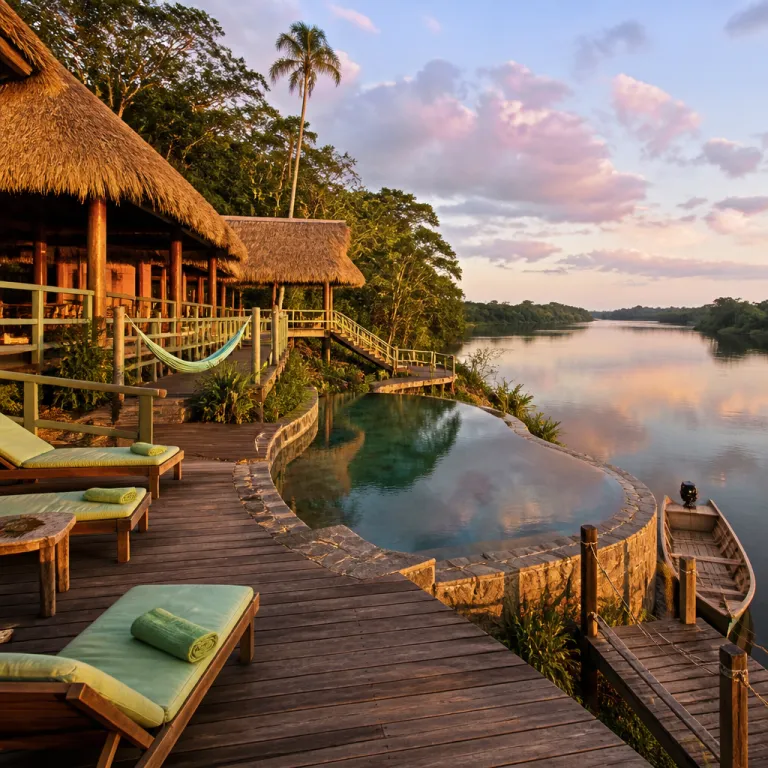
Bolivia Amazon landscapes and how they shape luxury stays
The Bolivia Amazon stretches from the Andean foothills to lowland pampas, creating a mosaic of forest, winding river, and flooded savanna. This immense tropical rainforest forms part of the wider Amazon basin of South America and offers a quieter alternative to the more visited Brazilian Amazon. For travelers seeking premium hotels and upscale ecolodges, the way jungle, pampas, and river systems meet will directly influence where you stay, how you move, and what kind of wildlife you see.
In northern Bolivia, the Amazon rainforest merges with the Beni pampas, and this transition zone hosts some of the highest concentrations of wildlife species in Latin America. Luxury lodges near Rurrenabaque, such as Chalalán Ecolodge and Madidi Jungle Ecolodge, use this mix of dense forest and open wetlands to design curated tours that balance comfort with close wildlife encounters. When you plan a Bolivia travel itinerary, you will quickly see that the most exclusive properties position themselves along navigable rivers, because access by boat reduces environmental impact and offers a calmer experience than long overland transfers on rough roads.
The Bolivia Amazon also differs from the Brazilian Amazon in its scale and visitor numbers, which remain comparatively low. This means premium hotels can offer more space, quieter jungle trails, and a stronger sense of privacy, while still connecting guests with the same Amazon jungle ecosystems. For discerning guests, that combination of seclusion, intact rainforest, and attentive service often represents the best value for the price, even when flights and transfers appear higher at first glance. As one recent guest at a Madidi lodge put it, “We saw more macaws than people in three days.”
Choosing the best time and place to stay in the Bolivia Amazon
Seasonality in the Bolivia Amazon is defined more by water levels than by temperature, and this has a direct impact on luxury hotel operations. The best time to visit for comfortable river navigation and fewer mosquitoes usually falls in the drier months from roughly May to October, when jungle trails are firmer and wildlife viewing along the forest edge becomes easier. During the wetter season, the Amazon jungle floods more extensively, and some high end lodges adjust their tour programs to emphasize canoe excursions, birdwatching, and sunrise boat safaris.
When you plan a trip that combines La Paz and the lowland rainforest, the short flight from La Paz to Rurrenabaque is usually the most efficient option. The air distance is about 300 kilometres, and direct flights typically take around 45 to 50 minutes, depending on aircraft and weather conditions. Many premium hotels and lodges bundle this La Paz–Rurrenabaque connection with private transfers, ensuring that your Bolivia travel experience remains seamless from city to jungle. For deeper guidance on the best time to visit Bolivia for luxury stays and iconic landscapes, it is wise to align your Amazon basin dates with any high altitude segments in La Paz or Uyuni.
Location also matters inside the Bolivia Amazon, because properties closer to national park boundaries often enjoy better wildlife viewing and stricter conservation rules. In the region around Madidi National Park, several upscale ecolodges operate inside community managed forest areas, which helps protect rainforest habitat from deforestation pressures. Guests who prioritize exclusivity should look for lodges that limit group sizes on each tour, because smaller groups will usually mean more flexible schedules and quieter encounters with rare species such as giant otters or harpy eagles.
Madidi National Park, Rurrenabaque, and the jungle pampas circuit
Madidi National Park is the flagship protected area of the Bolivia Amazon, and it is frequently cited by National Geographic and the Wildlife Conservation Society (WCS) for its exceptional biodiversity. Scientific surveys coordinated by Bolivian authorities and WCS indicate that Madidi and adjacent reserves may host well over 900 documented bird species and thousands of plant varieties, placing the region among the most species rich landscapes on Earth. From the town of Rurrenabaque, luxury travelers can access both deep forest lodges inside the Madidi National region and more open jungle pampas along the Yacuma River near Santa Rosa de Yacuma. This dual circuit allows you to experience dense Amazon rainforest one day and wide open pampas teeming with wildlife the next.
High end lodges in the Madidi National sector focus on immersive forest experiences, with guided walks that highlight medicinal plants, rare bird species, and the complex structure of the tropical rainforest canopy. In contrast, premium camps in the jungle pampas emphasize boat based wildlife viewing, where you will often see capybaras, caimans, and pink river dolphins at close range. Many guests choose a combined tour that spends several nights in each environment, balancing the intimacy of the forest with the panoramic views of the pampas. A typical three to five night itinerary might include two nights in a Madidi lodge for jungle hikes and night walks, followed by two nights in the pampas for sunrise boat trips and stargazing over the wetlands.
August in Bolivia often brings clear skies and cooler nights, which many travelers consider the best time for comfortable jungle and pampas excursions. If you are aligning your Amazon basin stay with Andean festivals or city breaks, resources such as August in Bolivia for clear skies and late season luxury can help refine your dates. Whatever month you choose, premium operators around Rurrenabaque usually include private river transfers, high quality equipment, and flexible tour options tailored to your fitness level and interests, from gentle walks to more demanding full day treks.
Luxury, conservation, and the reality of deforestation in the Bolivia Amazon
High end hotels in the Bolivia Amazon increasingly position themselves as guardians of the forest, because long term luxury depends on healthy ecosystems. The region faces real deforestation pressure from agriculture, cattle ranching, and road expansion, especially outside national park boundaries and community reserves. According to Bolivia’s environment ministry and independent research groups, the country has lost hundreds of thousands of hectares of forest over the past two decades, with lowland departments such as Beni and Pando under particular pressure. When you select a premium lodge, you are also choosing which conservation model you will support through your travel spending.
Properties operating near Madidi National Park and other protected areas often work with local communities to monitor wildlife species, restore degraded forest, and lobby for stronger national regulations. Lodges such as Chalalán, co managed with the San José de Uchupiamonas Indigenous community, collaborate with NGOs including the Wildlife Conservation Society (WCS) on research and ranger training. Many of these lodges design their tour programs to minimize disturbance, using smaller boats, quieter engines, and low impact trails through the Amazon jungle. Guests can expect transparent information about how a portion of the price is reinvested into conservation projects, from camera trap monitoring to environmental education for Bolivian school groups.
Some travelers compare the Bolivia Amazon with the Brazilian Amazon when evaluating where their money will have the greatest positive impact. While both regions belong to the wider Amazon rainforest, the Bolivian Amazon still retains large tracts of intact tropical rainforest, and targeted support for community based tourism can help keep them standing. By choosing operators that publish clear environmental policies and collaborate with recognized partners such as National Geographic affiliated projects or WCS backed initiatives, you align your luxury experience with long term protection of one of South America’s most important forest frontiers.
Practical planning for premium Bolivia Amazon itineraries
Planning a luxury journey into the Bolivia Amazon starts with mapping your route through the country. Many travelers arrive in La Paz from the United States or Europe, then connect via a short flight to the lowlands before or after visiting other Bolivian highlights. If you prefer a slower transition from high altitude to rainforest, you will find that some itineraries route through Cochabamba or Santa Cruz, but these options usually add time and complexity without significantly improving comfort.
Once you have fixed your international flights, the next step is to align your Amazon basin stay with other national icons such as Uyuni or Sucre. For example, you might spend several nights in a heritage hotel in Sucre, using a resource like this guide to where to stay in Bolivia’s white city, before flying north toward Rurrenabaque. This kind of south to north progression allows your body to adapt gradually while you enjoy both colonial architecture and the lush forest of the Bolivian Amazon. Many guests describe the moment the plane descends from the Altiplano into the green carpet of the lowlands as one of the most memorable transitions of their trip.
When comparing properties, look beyond the headline price and examine what each product includes, from private guides to flexible tour schedules. Premium lodges that cap group sizes and offer custom itineraries will often deliver a more refined experience than larger operations, even if the nightly rate appears similar. You should also check how each hotel handles payments for extras such as spa treatments, special wildlife photography tours, or chartered flights, because these details can significantly influence the final cost of your Bolivia travel experience and help you avoid unexpected charges at checkout.
Digital services, Amazon products, and what luxury travelers should know
Many guests heading into the Bolivia Amazon ask about logistics for gear and connectivity, especially when planning high end photography or scientific travel. While the region itself is remote, online retailers such as Amazon.com now ship a limited range of products to Bolivia through programs like AmazonGlobal. Official guidance confirms this reality clearly with statements such as “Does Amazon ship to Bolivia? Yes, but only select items.” and “How can I receive Amazon products in Bolivia? Use direct shipping or package forwarding services.” and “Are all Amazon products available for shipping to Bolivia? No, only certain items are eligible.”
For luxury travelers, this means you can often order specialized equipment or comfort items in advance, but you will need to verify whether each product is eligible for direct shipping. Amazon’s own documentation notes that only a portion of its catalogue qualifies for international delivery, and eligibility can change over time, so each item must be checked individually at checkout. Many Bolivian residents and frequent visitors use package forwarding partners based in the United States, which then route items south to La Paz or Santa Cruz before they continue toward the Amazon basin. If you plan a trip that includes both city hotels and remote rainforest lodges, it is usually best to schedule deliveries to an urban address where staff can safely store your gear until your jungle departure.
Premium hotels in La Paz and other Bolivian hubs are accustomed to assisting with this kind of logistics, especially for guests who will continue to the Bolivia Amazon for extended stays. They can help coordinate with local agencies in Rurrenabaque, ensuring that your equipment arrives in time for your first tour into the forest or pampas. By combining careful online planning with on the ground support from experienced Bolivian teams, you maintain the comfort and reliability expected from a luxury journey into one of South America’s most remote rainforest regions.
Comparing Bolivia Amazon luxury with other South American rainforest experiences
Travelers often weigh the Bolivia Amazon against other South American rainforest destinations when choosing where to invest in a premium stay. The Brazilian Amazon offers a vast network of river cruises and urban gateways such as Manaus, while the Bolivian Amazon focuses more on intimate lodges and quieter national park access. Peru and Ecuador, also part of Latin America’s Amazon basin, add further options with river cruises, canopy towers, and community based forest experiences in regions like Tambopata or the Yasuni area.
What sets the Bolivian Amazon apart is the combination of biodiversity, relative remoteness, and strong links between luxury properties and local communities. Around Rurrenabaque and the Madidi National region, many high end lodges are co managed with Indigenous groups, which ensures that a portion of the price you pay flows directly into forest protection and cultural preservation. This model contrasts with some areas of the Brazilian Amazon, where large scale operations can feel more detached from local realities, even though they also operate inside the same Amazon rainforest.
For guests who value exclusivity and authenticity, the Bolivia Amazon often emerges as the best choice within the wider Amazon jungle. You will trade some urban comforts, such as large shopping malls or frequent flights, for deeper immersion in forest and pampas ecosystems. In return, you gain access to national park zones that remain among the most intact in South America, where the chorus of wildlife species at night becomes a defining memory of your Bolivian journey and a reminder of why this forest still matters.
Key figures for luxury and premium travel in the Bolivia Amazon
- Amazon.com does not publish a fixed percentage of items eligible for international shipping, and availability varies by product and date, so travelers should check each item individually to confirm whether it can be sent directly to Bolivia before purchase.
- The Bolivia Amazon forms part of an Amazon basin that spans eight South American countries, and Bolivia’s share is commonly estimated in national land use studies and international research as several hundred thousand square kilometres of tropical rainforest and associated ecosystems.
- Madidi National Park and its surrounding protected areas host thousands of documented wildlife species, placing this Bolivian region among the most biodiverse protected landscapes on Earth according to National Geographic, the Wildlife Conservation Society (WCS), and other research institutions.
- Rurrenabaque sits at roughly 200 metres above sea level, creating a sharp contrast with La Paz at over 3,500 metres, so luxury itineraries often include at least one acclimatisation night before flying from the high plateau to the lowland forest.
- Direct flights from La Paz to Rurrenabaque typically take under one hour, which allows premium travelers to move from an urban hotel in La Paz to a rainforest lodge in the Bolivia Amazon within the same day, often arriving in time for an afternoon river excursion.
FAQ about luxury hotels and travel in the Bolivia Amazon
Is the Bolivia Amazon safe for luxury travelers who are new to the jungle ?
Yes, the Bolivia Amazon is generally safe for luxury travelers who choose reputable lodges and tour operators with strong safety protocols. High end properties provide experienced guides, well maintained boats, and clear briefings on wildlife and river conditions. As with any remote rainforest region, you should follow staff advice closely, carry any personal medication you need, and ensure you have appropriate travel insurance that covers river transport and medical evacuation.
How does the Bolivia Amazon compare with the Brazilian Amazon for premium stays ?
The Bolivian Amazon offers a quieter, more intimate experience than many parts of the Brazilian Amazon, with fewer visitors and a stronger emphasis on small lodges rather than large cruise ships. Wildlife viewing can be excellent in both regions, but Bolivia’s Madidi National Park and surrounding forest often feel more remote and less developed. For travelers who value seclusion, community partnerships, and a sense of exploration, the Bolivia Amazon is often the preferred choice.
What is the best time to visit the Bolivia Amazon for comfortable weather ?
The best time to visit the Bolivia Amazon for comfortable weather usually falls in the drier months, when river levels are moderate and mosquito activity is lower. During this period, trails in the forest and pampas are easier to navigate, and wildlife tends to concentrate along remaining water sources. However, wetter months can offer richer colours, more dramatic river landscapes, and increased chances of seeing certain bird species, so the ideal season depends on your priorities.
Do luxury lodges in the Bolivia Amazon offer all inclusive packages ?
Most luxury lodges in the Bolivia Amazon operate on an all inclusive basis that covers accommodation, meals, guided tours, and river transfers. Some properties also include the domestic flight from La Paz to Rurrenabaque in their packages, while others leave flights and certain premium activities as optional extras. It is important to review what each package includes so you can compare the true overall price rather than just the nightly rate and avoid surprises once you arrive.
Can I rely on online retailers like Amazon.com to supply gear for my Bolivia Amazon trip ?
You can often use Amazon.com to purchase specialised gear for your Bolivia Amazon journey, but only select items are eligible for direct shipping to Bolivia. Many travelers send products to a United States based forwarding service, which then ships them south to a Bolivian city hotel before they continue to the rainforest. Always check delivery times, customs rules, and eligibility well before your departure date to avoid last minute complications and ensure your equipment arrives before you head into the jungle.