Why luxury logistics shape every uyuni salt flats photography guide
Staying beside the salt rather than in town changes everything. When your driver eases the 4x4 onto the salar before dawn, you will already be rested, warm and thinking about your first photo instead of the road. For couples planning premium travel in Bolivia, this is the best foundation for memorable shots and relaxed days.
Properties such as Kachi Lodge, Palacio de Sal and Luna Salada sit close enough to the salt flats that golden hour becomes effortless. From these salt edge retreats, a private uyuni tour can reach the open flats of Bolivia Uyuni in minutes, giving you more time with your camera and less time in transit. That proximity is what separates a casual day tour from a crafted uyuni salt flats photography guide designed around light, comfort and privacy.
Luxury lodges also understand how the salar behaves across each season. Their teams track the dry season and the rainy season, advising when the salt flat is safe to cross and where reflections form first. When you travel Bolivia with photography in mind, this local knowledge from a seasoned tour operator often matters more than the latest lens or the theoretical best time of day.
For couples who like to read deeply before they travel, think of this as a playbook rather than a checklist. You are not only chasing uyuni photos ; you are curating a sequence of subjects, from sunrise sunset on the flats Bolivia to quiet blue hour portraits back at the lodge. Every decision about where you sleep, which guide you hire and how far you hop across South America will echo in your final photos.
Dry season versus rainy season: choosing your salt flat canvas
The Salar de Uyuni is really two different subjects, depending on the time year you visit. During the dry season, the surface hardens into endless hexagonal salt polygons, perfect for clean horizon lines and sharp perspective photos. In the rainy season, a thin layer of water turns the salt flats into a mirror, ideal for reflection shots but more complex for logistics.
For many couples, the best time to travel Bolivia for photography is when the seasons are shifting and both moods are possible. Early or late in the rainy season, your tour operator may find areas where the salar Uyuni remains dry while nearby sections flood into glassy uyuni salt reflections. That mix lets you shoot both graphic salt textures and ethereal uyuni photo compositions during the same stay.
Luxury travelers often pair Uyuni with other Bolivian icons such as Lake Titicaca or the refined stays between Potosí and Cochabamba. If you are planning a wider itinerary, this detailed guide to reimagined luxury stays between Potosí’s heights and Cochabamba’s springlike valley helps you balance altitude, rest and photography days. That way, you arrive in Uyuni acclimatized, with enough energy to wake for sunrise sunset sessions on the flats Bolivia without sacrificing comfort.
Weather also shapes how you move across the salt. In the dry season, drivers can usually cross the salar directly, reaching remote subjects quickly for private shots and long exposures. When water deepens in the rainy season, routes shorten and some day trips become shoreline only, so your uyuni salt flats photography guide should always include a candid conversation with your lodge and guide about current conditions.
Staying on the edge of the salt: where luxury meets first light
For serious photographers, the real luxury in Uyuni is not marble lobbies ; it is waking up a short drive from the salt flats. Properties such as Kachi Lodge, Palacio de Sal and Luna Salada place you close enough that a pre dawn hop into the 4x4 feels effortless, even at altitude. This proximity turns golden hour from a rushed excursion into an unhurried ritual.
From these salt side bases, you can plan multiple short day trips rather than one exhausting marathon tour. One morning might focus on wide angle shots of the salar Uyuni under pastel skies, while another targets tighter uyuni photo compositions of salt crystals and distant volcanoes. Returning to a heated room, hot shower and refined dining between sessions keeps both people in the couple energized and patient, which always shows in the final photos.
For a deeper look at where to sleep above the salt, consult this dedicated guide to luxury stays above Bolivia’s sky of salt. It explains how each property handles private tours, camera friendly vehicle setups and sunrise sunset departures. When you align the right lodge with the right tour operator, your uyuni salt flats photography guide becomes a seamless part of your overall stay rather than a separate, stressful project.
Night photography is another reason to stay close to the salar. On clear nights in the dry season, the sky above Bolivia Uyuni explodes with stars, and the salt flat reflects them like a muted mirror. Being minutes away means you can step out for astrophotography, return to warm up, then head back for a second round of shots when the Milky Way shifts position.
Crafting your images: light, horizons and tasteful perspective play
Every uyuni salt flats photography guide should start with light rather than gear. The salar is brutally bright at midday, flattening subjects and washing out subtle tones, so plan your best shots for the first and last two hours of daylight. During sunrise sunset, the low angle light sculpts the salt and clouds, giving your photos depth and a sense of scale.
On the dry salt flat, the horizon can vanish into haze, so you must work deliberately. Keep the camera low to emphasize foreground salt textures, then raise it for minimalist compositions where people become tiny silhouettes against the sky. When you play with perspective photos, use them sparingly and anchor at least some frames in genuine emotion, such as a couple walking hand in hand across the flats Bolivia.
Reflections during the rainy season demand a different approach. Even a small ripple can distort subjects, so ask your guide to find sheltered pools where the water is still enough for mirror like uyuni photos. A private day tour with an experienced tour operator will often include quiet corners away from crowds, letting you shoot both wide landscapes and intimate portraits without distractions.
Luxury travelers often combine Uyuni with other photographic stops in South America, from the colonial streets of Sucre to the shores of Lake Titicaca. If you plan to travel Bolivia independently between regions, consider how your visual story will unfold across the trip, not just on the salt flats. That narrative mindset helps you decide when to put the camera down and simply read the landscape with your eyes before lifting the viewfinder again.
Gear, guides and staying comfortable while you shoot
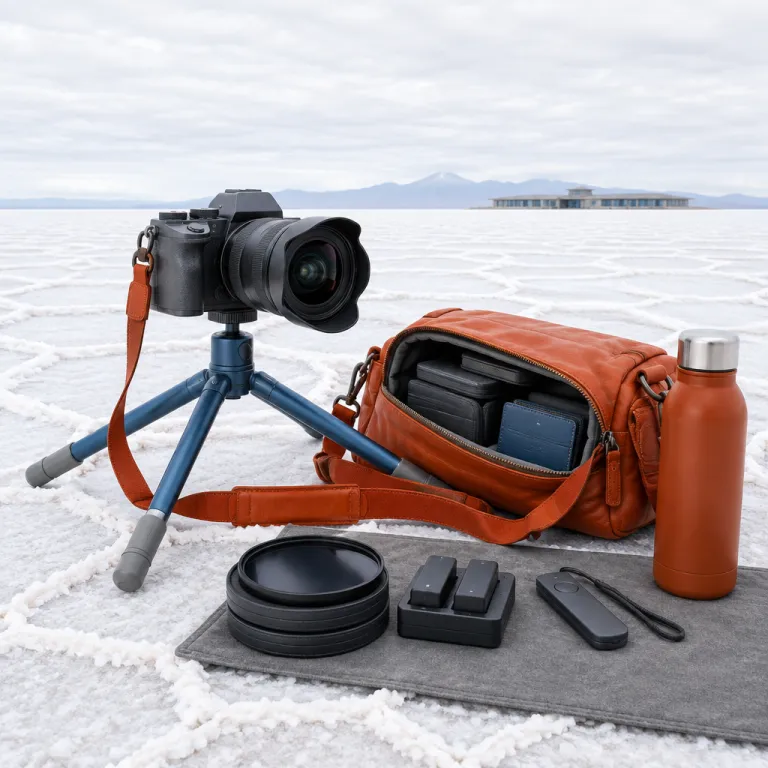
On the salar, the right camera setup matters less than how you protect it. Fine salt dust and water can corrode equipment, so bring simple rain covers, microfiber cloths and sealable bags for lenses between locations. Cold nights drain batteries quickly, so keep spares close to your body and rotate them during long sunrise sunset or night sessions.
A private guide driver is the quiet hero of any uyuni salt flats photography guide. Choose a tour operator that understands photographers, not only tourists, and ask specific questions about timing, flexibility and willingness to adjust plans for changing light. Some companies, including regional services such as Bolivia Hop, can arrange custom day trips or multi day itineraries that link Uyuni with other highlights of travel Bolivia.
Altitude and exposure are as real as any technical challenge. Drink water steadily, wear high SPF protection and use layered clothing so you can adjust quickly as the temperature swings across the time year. If one person in the couple needs more rest, consider splitting sessions or booking properties that cater well to solo guests, using resources such as this guide to Bolivia’s most rewarding hotels for solo travelers as a reference for comfort standards.
Finally, think about how you will move through South America before and after Uyuni. Some travelers hop from La Paz to the salt flats and then onward to Lake Titicaca, while others weave in the wine valleys of Tarija or the city energy of Santa Cruz. Whatever your route, build in buffer days so that if weather shifts or a perfect sky appears unexpectedly, you can extend your stay and give your photos the unhurried time they deserve.
FAQ
What is the best time of year to photograph the Salar de Uyuni ?
The best time of year depends on the images you want. For crisp salt textures and easy driving conditions, the dry season offers reliable access and strong graphic lines on the salt flat. For mirror reflections, the rainy season brings shallow water to parts of the salar, though routes may be shorter and conditions change quickly.
Do I need professional camera gear for great Uyuni photos ?
You do not need professional equipment to return with memorable Uyuni photos. A recent smartphone or a simple mirrorless camera with a wide angle lens can capture most scenes beautifully if you pay attention to light and composition. What matters more is protecting your gear from salt and moisture, carrying spare batteries and working with a guide who understands photographers.
Is it better to stay in Uyuni town or near the salt flats ?
For photography focused trips, staying near the edge of the salt flats is usually better. Lodges close to the salar reduce driving time and make sunrise, sunset and night sessions far more comfortable, especially at altitude. Town stays can work for quick visits or budget travel, but they rarely match the convenience and atmosphere of salt side properties.
Can I combine Uyuni with other luxury destinations in Bolivia ?
Uyuni pairs naturally with several other high end stops in Bolivia. Many travelers combine the salt flats with Lake Titicaca, Sucre or the valleys around Cochabamba to balance stark landscapes with softer climates and cultural experiences. Working with a knowledgeable tour operator or specialist agency helps you sequence these regions for altitude, rest and varied photographic subjects.
How long should a couple plan to stay for photography on the salar ?
For couples who care about photography, a minimum of two nights near the salt flats is advisable. This allows at least one full day on the salar plus extra sunrise or sunset sessions, with time to rest between outings. If you want both dry salt textures and reflections, or if you are aiming for night sky images, three nights offer a more relaxed and flexible rhythm.