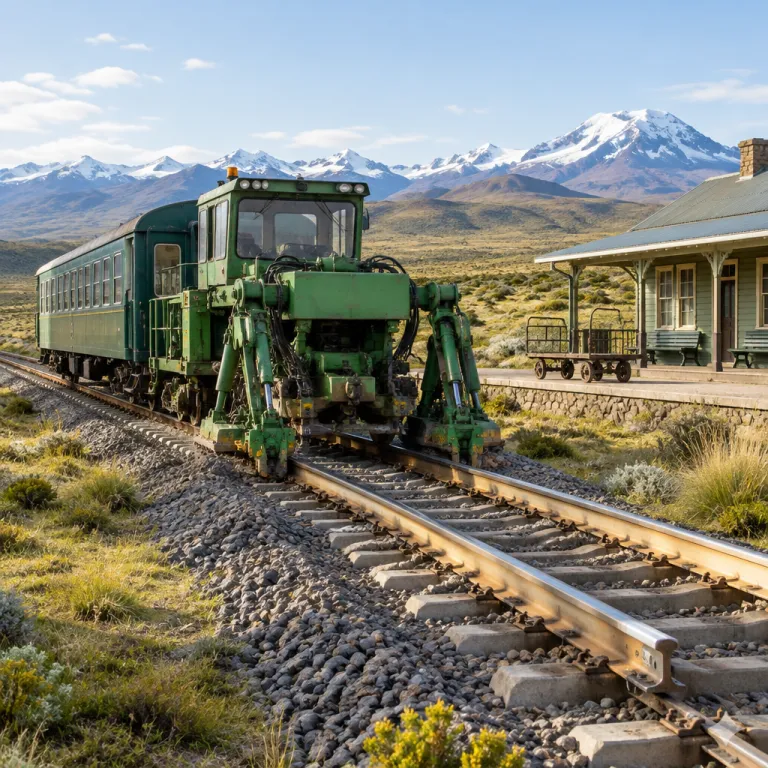
The romance of bolivia train travel across the high altiplano
Bolivia train travel on the altiplano is about watching space slowly widen. From the window of a modest train, the plateau stretches in muted silvers and ochres, and the sense of scale quietly resets your idea of distance. This is where a single rail journey can feel more cinematic than any short flight between cities.
On these routes, a train sees what a plane cannot, especially across the long corridor between Oruro and Uyuni where the tracks slice through llama pasture, salt crust and volcanic silhouettes. The current services are not palace on wheels experiences, yet the scenery delivers a level of drama that rivals any rail line in South America. For a solo explorer, this Bolivia train travel altiplano scenic rail experience becomes a moving balcony, and the carriage turns into a shared lounge where conversations drift between routes, hotels and the next remote station.
Think of the altiplano as a spine that links Bolivia’s iconic locations rather than a void between them. A single train journey between Oruro and the salt flat region can anchor a wider itinerary that includes Lake Titicaca, La Paz and the southern frontier around Villazón. When you plan your travel this way, the train is not just transport; it is the narrative thread that connects each city, each hotel and each landscape.
Most travelers still default to flights between La Paz, Santa Cruz and Uyuni, but rail offers a slower, lower impact alternative that feels truer to the terrain. The current railway company services in the south, operated on the former Empresa Ferroviaria Andina (FCA) network and now managed by regional concessionaires, are basic yet reliable enough to structure a thoughtful route if you understand the schedules. For luxury focused travelers, the key is to pair these trains with high end stays before and after each leg, using the rail segments as curated experiences rather than endurance tests.
On board, expect simple seating, a mix of locals and a few camera laden visitors, and a rhythm that encourages reading, journaling or simply watching the light shift. The trains that cross the altiplano typically take around seven hours between Oruro and Uyuni and longer on the southbound legs, but those hours are where Bolivia’s vastness becomes tangible and where the idea of slow travel stops being a slogan. For many guests who book through myboliviastay.com, this Bolivia train travel altiplano scenic rail approach becomes the most memorable part of their journey, precisely because it resists instant gratification.
What runs today: from oruro uyuni to the southern frontier
Current Bolivia train travel focuses on the southern network, with Oruro and Uyuni acting as practical gateways. The classic Oruro Uyuni route remains the most useful stretch for travelers heading to the salt flats, even if timetables can shift and require confirmation close to departure. Think of Oruro as a working rail city rather than a destination, with its main train station a few minutes from the historic center and serving as a functional but atmospheric starting point.
South of Uyuni, the Expreso del Sur service links the plateau to the Argentine border, and this is where the romance of long distance rail returns. The train journey between Uyuni, Tupiza and Villazón threads through canyons, riverbeds and red rock formations that feel almost Martian in late afternoon light. While the name Expreso del Sur suggests speed, the real luxury lies in the unhurried pace and the chance to watch entire valleys unfold from your seat.
Schedules typically cluster around specific days, with departures often running on a Monday to Thursday pattern or a Tuesday to Thursday cadence, and some services operating only once each Sunday each month. Typical departure windows fall in the late afternoon or evening, with arrivals around dawn or shortly after sunrise, so tickets must be treated as anchors in your itinerary rather than flexible add ons that you adjust at the last minute. Before you commit to hotel reservations, cross check the latest train travel information with a trusted Bolivia travel advisory for refined stays, then lock in your rail segments.
On these routes, you will encounter both the Expreso del Sur and the Wara del Sur services, each operated by the regional railway company that manages southern Bolivia’s lines under state oversight. The Wara del Sur trains tend to be slightly more utilitarian, while the Expreso del Sur offers a marginally more comfortable ride, though neither should be confused with luxury rail in other parts of South America. What they share is access to landscapes that no highway can frame in quite the same way.
Key junctions such as the Uyuni train station and the smaller stops near Tupiza and Villazón feel like time capsules, with low platforms, basic waiting rooms and a steady flow of luggage and produce. From these stations, onward travel by private 4x4 or hotel transfer becomes essential, especially if you are heading to remote lodges or high end salt flat properties. For solo travelers, this is where a curated booking platform earns its keep, coordinating train tickets, transfers and hotel check ins into a seamless sequence.
Uyuni, tupiza and the southern altiplano as a luxury rail corridor
Between Uyuni and Tupiza, Bolivia train travel across the altiplano becomes a study in gradients, both in altitude and in comfort. The stretch south from the Uyuni train station towards Tupiza passes abandoned sidings, mineral loading points and villages that seem to hover between desert and sky. For many travelers, this is their first sustained encounter with the southern altiplano’s stark beauty.
Tupiza itself is a compact city framed by rust colored cliffs, and the arrival of a Tupiza train feels like a small event each time it pulls into the station. From here, the route continues towards Villazón, creating the practical Villazón Tupiza corridor that links Bolivia with northern Argentina. While the trains are simple, the combination of rail and high end lodges in and around Tupiza allows you to experience this frontier region without sacrificing comfort.
Luxury travelers often pair a southbound Expreso del Sur segment with a stay in one of the refined properties around the Salar de Uyuni, using rail as the connective tissue between sky mirror landscapes and canyon country. A well planned itinerary might start with a night in La Paz, continue with a flight or overland transfer to Oruro, then shift to train travel down to Uyuni before moving on to a curated salt flat escape. From there, another train journey towards Tupiza and Villazón completes a loop that feels both coherent and adventurous.
For those focused on the salt flats, it is worth exploring dedicated guidance on luxury stays around the Salar de Uyuni salt flats for an unforgettable Bolivian escape before you book your trains. High end properties near Uyuni can arrange private transfers from the station, timed to meet the Expreso del Sur or Wara del Sur arrivals. This coordination matters, because the trains often arrive late at night or in the early morning, when independent transport options are limited.
South of Uyuni, the landscape gradually softens as you approach Villazón, and the sense of crossing an entire region by rail becomes more pronounced. The Bolivia Villazón border town may not be glamorous, but it marks the end of a route that has carried you across a significant slice of South America without the blur of air travel. For solo explorers, this corridor offers a rare combination of authenticity, manageable logistics and the quiet satisfaction of having followed the old tracks rather than the newest highway.
Future lines, revived tracks and the sustainability argument
Bolivia is in the midst of a rail modernization effort that aims to make train travel more central to both tourism and trade. Plans discussed by national authorities include upgraded amenities on existing services around Uyuni, new tourist focused routes that could eventually link La Paz with the salt flat region, and the gradual reactivation of the historic Arica to La Paz line that connects Bolivia with Chile. For travelers who care about how they move as much as where they sleep, this Bolivia train travel altiplano scenic rail revival is worth watching closely.
While timelines can shift, and official announcements have so far focused on feasibility studies and phased rehabilitation rather than fixed opening dates, the direction of travel is clear; rail is being positioned as a lower impact alternative to short haul flights and long bus journeys across the altiplano. When these projects mature, a traveler might step from a refined La Paz hotel into a modern train station, then ride across the plateau in upgraded carriages before transferring to a high end lodge near Uyuni. That kind of integrated experience would align Bolivia with other South America rail destinations while preserving the country’s distinctive sense of remoteness.
Even before the full modernization arrives, choosing trains where they exist already reduces your footprint compared with domestic flights, especially on routes like Oruro Uyuni or the longer Expreso del Sur corridor. Rail uses less energy per passenger kilometer than air travel, and the slower pace encourages longer stays in each city rather than rapid fire hopping. For luxury travelers, this slower rhythm often translates into deeper engagement with local culture and more meaningful time in each property.
There is also a quiet cultural dimension to this revival, as communities along the tracks see renewed relevance when trains return or improve. Stations that once felt abandoned can become modest hubs again, supporting small scale hospitality and guiding services that complement high end hotels further along the route. When you buy tickets and plan a train journey through these areas, you participate in an economy that values continuity over extraction.
From a sustainability perspective, the ideal future itinerary might combine rail segments with carefully chosen road transfers and minimal internal flights. You could, for example, fly into Santa Cruz, connect overland or by air to La Paz, then rely on trains and private drivers for the altiplano legs. As the railway company upgrades services and new lines come online, Bolivia train travel altiplano scenic rail options will only become more compelling for travelers who want their journey to align with their values.
Layering rail into a refined bolivian itinerary
For a solo traveler using myboliviastay.com, the art lies in weaving Bolivia train travel altiplano scenic rail segments between carefully chosen hotels. Start by deciding which iconic locations matter most to you; perhaps Lake Titicaca, La Paz, Uyuni and the southern canyons around Tupiza. Then map where trains already run and where they are likely to improve in the coming years.
A classic route might begin with a few nights in La Paz, using a refined Andean property as your base before heading towards the lake. From there, you could return to the capital, transfer to Oruro by private car, then board a train towards Uyuni for a multi day salt flat stay. After that, continuing south on the Expreso del Sur towards Tupiza and Villazón rounds out a journey that feels both structured and flexible.
Throughout this itinerary, hotels do the heavy lifting in terms of comfort, while the trains provide texture and narrative. In La Paz, consider an elegant stay that understands altitude and offers quiet, oxygenated rooms before you head higher onto the plateau. For a refined Andean journey that balances character with comfort, many travelers look to properties highlighted in guides to elegant stays at Hotel Rumi Punku for refined Andean journeys, then extend that standard to other cities.
On the ground, practicalities matter; train tickets can sell out around local holidays, and schedules may change with limited notice. Expect to buy tickets either directly at major stations such as Oruro and Uyuni or through authorized local agencies, and work with a specialist who monitors the railway company updates and can adjust transfers or hotel nights if a train is rescheduled. This is especially important on routes that operate only on specific days, such as those that run Monday to Thursday or Tuesday to Thursday, or that appear just once each Sunday each month.
Finally, manage expectations with care. Bolivia’s rail revival is a work in progress, not a finished luxury product, and even the best planned train journey may involve delays, basic catering or sudden changes in rolling stock. If you approach Bolivia train travel across the altiplano as a textured, occasionally imperfect way to connect exceptional hotels and extraordinary landscapes, you will find that the slow track often delivers the richest memories.
FAQ
Is train travel in Bolivia currently suitable for luxury focused itineraries ?
Train travel in Bolivia is not yet a full luxury rail experience, but it can complement a high end itinerary when paired with refined hotels and private transfers. The key is to treat trains as scenic segments rather than expecting five star service on board. With realistic expectations, the altiplano routes add depth and character to an otherwise polished journey.
Which train routes are most useful for visiting the Salar de Uyuni ?
The most practical rail segment for visiting the Salar de Uyuni is the route between Oruro and the Uyuni train station, which connects reasonably well with onward 4x4 transfers to salt flat lodges. Some travelers also use the longer Expreso del Sur services that pass through Uyuni as part of a wider southbound journey. Always confirm current schedules before booking hotels, as timetables can change.
How far in advance should I buy train tickets in Bolivia ?
It is wise to buy train tickets several days in advance, especially during local holiday periods or peak travel seasons. Services that run only on specific days, such as those operating Monday to Thursday or Tuesday to Thursday, can fill quickly. A specialist booking platform or local partner can often secure tickets and coordinate them with hotel reservations.
Are Bolivian trains reliable for tight connections with flights or tours ?
Bolivian trains can experience delays, so they are not ideal for very tight same day connections with flights or time sensitive tours. Plan at least one buffer night in a nearby city before any major international departure. Using trains between longer hotel stays rather than as last minute links reduces stress and preserves flexibility.
How does train travel compare with buses and flights in terms of comfort and sustainability ?
Trains generally offer more space to move around than buses and a smoother ride across the altiplano, though on board amenities remain basic. Compared with domestic flights, rail typically has a lower environmental impact per passenger and encourages slower, more immersive travel. For many visitors, combining one or two scenic train segments with selective flights and private road transfers offers the best balance of comfort and sustainability.