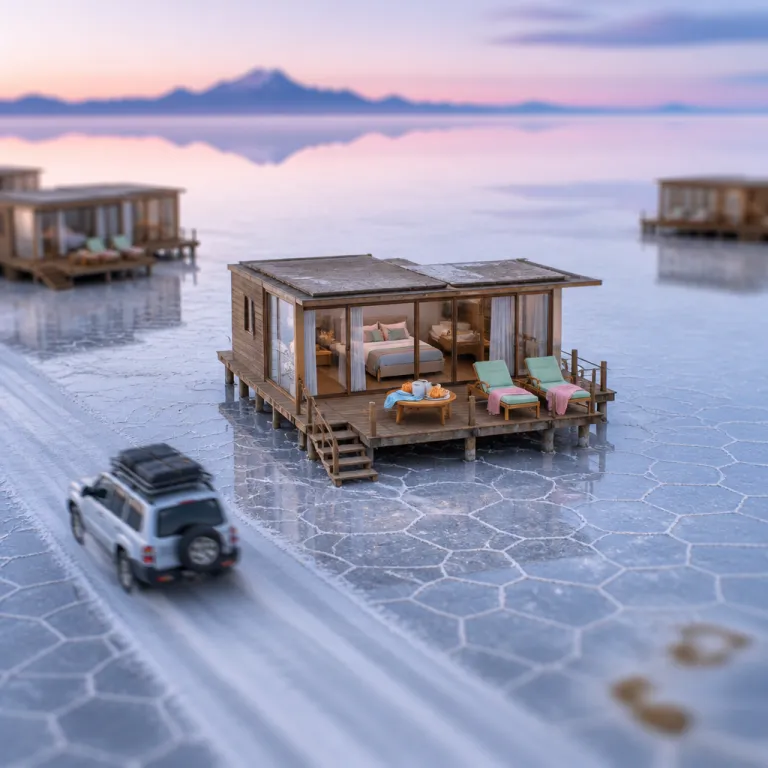
Why the Salar de Uyuni in Bolivia defines once in a lifetime luxury travel
The Salar de Uyuni in Bolivia is the largest salt flat on earth and it reshapes what luxury travel can mean. High end guests arrive in Uyuni expecting comfort, yet they leave speaking about silence, science and the surreal light that turns the salar into a private planet. This remote corner of Bolivia offers a rare experience where refined hotels sit beside raw nature and where every day feels like a carefully curated expedition.
Geologists explain that this immense salt flat formed from prehistoric lake basins that dried up long ago, leaving a crust that is generally a few metres thick with local variations. The official description answers a key question for many travellers; “What is Salar de Uyuni?” and the response is clear: “World's largest salt flat in Bolivia.” Luxury properties around Uyuni now build their identity around this geological story, using blocks of uyuni salt in their architecture and designing suites that frame the salar like a living artwork.
From the air the salar looks almost unreal, which is why NASA and its Earth Observatory have used the region as a calibration site for satellites for many years. Astronauts on the International Space Station often photograph the salt flats because the white surface reflects sunlight in a way that few places in South America can match. When you book a premium stay near the Salar Uyuni area, you are not just reserving a room; you are securing front row seats to one of the most studied landscapes on earth.
Choosing the right season and time to visit for a premium stay
Planning a luxury escape to the Salar de Uyuni in Bolivia starts with choosing the right season for your expectations. The dry season usually runs from roughly May to October and it reveals sharp hexagonal patterns across the salt flat that photographers adore. During this period, high end hotels near Uyuni salar focus on sunrise and sunset excursions, when the light cuts across the flats and the air feels crystal clear.
By contrast, the rainy season or wet season transforms the salar into a shallow lake that behaves like a mirror. Local guides summarise it simply; “When is the best time to visit Salar de Uyuni? Dry season for salt patterns; rainy season for mirror effect.” Luxury travellers often split their days between spa treatments and carefully timed outings, using private 4x4 vehicles to reach sections of the salt flats where the water depth is only a few centimetres and reflections are perfect.
Some guests pair their Uyuni Bolivia stay with elevated nights on Lake Titicaca, using curated itineraries that link the sacred island landscapes with the salar’s lunar views. For travellers seeking refined accommodation on the lake, it is worth exploring elevated stays on Lake Titicaca’s Isla del Sol as a complement to a salt flat journey. Whether you prefer the calm of the dry season or the drama of the rainy season, the key is to align your time visit with the exact experience you want from this part of South America.
How to reach Uyuni and structure your luxury salt flat itinerary
Access to Uyuni has improved significantly, which makes planning a premium itinerary around the Salar de Uyuni in Bolivia far more comfortable than it once was. Most luxury travellers fly from La Paz to Uyuni on a journey of about 50 minutes, then transfer by private vehicle to their hotel on or near the salt flat. Those who prefer overland routes can still take a first class bus service of roughly 8 to 10 hours, but the flight saves many hours and preserves energy for long days on the salar.
Once in town, high end properties usually arrange a private day tour or multi day tour that includes the salt flats, the train cemetery and nearby lagoons. A typical one day tour from a luxury hotel might start before dawn, reach the centre of the salt flat by sunrise and then continue to the old train cemetery for atmospheric photographs among rusted carriages that once connected Bolivia Uyuni with Chilean ports. Guests often appreciate flexible itineraries that allow extra time at favourite viewpoints, especially when the wet season creates perfect reflections.
For groups or families seeking villas and larger residences, curated collections such as the Bolivia group travel properties for six or more guests can be a strong starting point. These options allow you to combine nights in La Paz, Lake Titicaca and Uyuni salt regions without sacrificing privacy or service standards. When planning, consider at least three days in the Uyuni salar area so that you can adapt to changing weather and still enjoy a full luxury experience on the flats.
Luxury hotels built from salt and how they elevate the experience
One of the most striking aspects of staying near the Salar de Uyuni in Bolivia is the architecture of the premium hotels themselves. Many high end properties are constructed partly or entirely from uyuni salt blocks, creating walls, beds and even sculptures from the same material that forms the salt flat outside. This design choice turns each stay into a tactile experience where guests can literally feel the salar’s geology in their rooms.
Inside these salt hotels, polished concrete, natural textiles and large windows soften the stark white of the salt flats and frame the horizon. Suites often feature fireplaces, heated floors and deep soaking tubs, which are essential comforts after long days exploring the salar uyuni region in cold, dry air. Top tier properties such as Palacio de Sal or Luna Salada also offer observatories or rooftop terraces, allowing guests to watch the Milky Way arch over the flat landscape with almost no light pollution.
Service standards in these hotels match the setting, with private guides, tailored menus and flexible check in times that respect the unusual rhythm of salt flat excursions. Many chefs highlight Bolivian ingredients such as quinoa, llama and trout from Lake Titicaca, pairing them with international techniques to create refined tasting menus. When you read property descriptions, look for details about insulation, heating and water management, because these technical aspects determine how comfortable your nights will feel at more than 3 650 metres above sea level.
Science, space and the singular landscape of Uyuni for discerning travellers
Beyond its visual drama, the Salar de Uyuni in Bolivia holds deep scientific interest that appeals to curious luxury travellers. The salar’s surface is so flat that variations in elevation are measured in mere centimetres across many kilometres, which is why NASA and other science agencies use it to test instruments. The NASA Earth Observatory has repeatedly highlighted the region as a benchmark for satellite calibration, and images from the International Space Station show the salt flats as a bright white patch against the darker Andes.
Guides who specialise in science themed tours can explain how the prehistoric lake that once covered the area evaporated long ago, leaving behind concentrated minerals and one of the largest salt reserves of its kind. Peer reviewed research and summaries by Bolivia’s national mapping agency indicate that the salar evolved from palaeolakes such as Lake Minchin and Lake Tauca roughly 30 000 to 40 000 years ago, a timeframe also referenced in US Geological Survey syntheses on Andean salars. Some excursions include visits to small scale salt extraction sites, where you can see how workers cut blocks of uyuni salt and pile them into conical mounds that dry in the sun.
At night, the combination of high altitude, dry air and minimal light pollution creates exceptional stargazing conditions over the Uyuni salar. Some premium properties provide telescopes and arrange talks about astronomy, linking the view from the flats to what astronauts see from the space station. For travellers who value intellectual depth alongside comfort, this blend of earth science, space observation and refined hospitality makes Uyuni Bolivia one of the most compelling destinations in South America.
Curating a multi day premium journey around Uyuni and Bolivia’s iconic locations
Many high end guests choose to integrate the Salar de Uyuni in Bolivia into a wider Bolivian itinerary that includes La Paz, Lake Titicaca and sometimes the wine region around Tarija. A thoughtful sequence might start with a few days in La Paz to acclimatise, continue to Lake Titicaca for gentle hikes and cultural visits, then culminate with three or four days on the salt flats. This structure allows your body to adjust to altitude gradually while building towards the visual climax of the Uyuni salt landscape.
When planning the number of days, consider how the dry season and rainy season will affect your activities. In the dry months, you may want extra time for 4x4 expeditions across the salt flat, visits to the train cemetery and side trips to coloured lagoons filled with flamingos. During the wet season, you might prioritise fewer but longer outings timed around sunrise and sunset, when the shallow lake covering the flats creates the most intense reflections.
Luxury travellers who value quieter experiences often look at shoulder periods between peak months, and curated resources such as Bolivia’s shoulder season deals for luxury travellers can help refine dates. Private transfers, charter flights and personalised guiding are worth the investment here, because distances in Bolivia are long and road conditions can vary. With the right planning, a journey that links Bolivia Uyuni, Lake Titicaca and other iconic locations becomes a coherent narrative rather than a series of disconnected day tours.
Practical tips for premium guests: timing, comfort and responsible travel
Comfort on a luxury trip to the Salar de Uyuni in Bolivia depends on respecting altitude, climate and logistics. The salar sits at roughly 3 656 metres, while Lake Titicaca lies near 3 810 metres, so even in premium hotels guests should plan slow first days, drink plenty of water and avoid heavy meals on arrival. Warm layers, quality sunglasses and high SPF sunscreen are essential, because the combination of altitude and the reflective salt flat can be intense.
Transport choices also shape the overall experience, especially when travelling by bus or 4x4 across long distances. Many luxury travellers now opt for private vehicles with experienced drivers who know how to navigate the flats safely during both the dry season and the wet season. When you read itinerary proposals, pay attention to driving times in hours and minutes, and ensure that each day balances time on the road with time on the salar itself.
Responsible travel is increasingly important in this fragile environment, where climate patterns and lithium extraction raise complex questions. Choosing hotels and tour operators that minimise water use, manage waste carefully and support local communities helps protect the Uyuni salt ecosystem. Estimates compiled by the US Geological Survey on lithium resources in the Central Andes suggest that Bolivia may hold a substantial share of global brine based reserves in and around the Salar de Uyuni, which is why discussions about sustainable tourism, extraction and local benefit sharing are so prominent. By aligning your spending with operators who respect both science and culture, you ensure that future guests can enjoy the same pristine views that first drew NASA scientists and luxury travellers to this extraordinary corner of South America.
Key figures about the Salar de Uyuni and luxury travel
- The Salar de Uyuni covers about 10 582 km² at an elevation of roughly 3 656 m, making it the largest salt flat on earth and a unique setting for high end hotels (data referenced from widely cited encyclopaedic sources and Bolivia’s national mapping agency).
- Geological studies indicate that the salar formed from prehistoric lakes that evaporated between about 30 000 and 40 000 years ago, which explains the notable thickness of the salt crust and the presence of significant lithium rich brines beneath the surface.
- Estimates published by the US Geological Survey and international media suggest that Bolivia may hold a substantial share of the world’s known lithium resources in and around the Salar de Uyuni, a factor that increasingly shapes discussions about sustainable tourism and resource extraction.
- Typical luxury itineraries allocate at least three days to the Uyuni region, allowing one full day tour on the salt flats, one day for surrounding attractions such as the train cemetery and lagoons, and one flexible day to adapt to weather or altitude.
- Altitude at the salar is slightly lower than Lake Titicaca, which is why many premium itineraries recommend spending several nights at the lake first to acclimatise before travelling on to Uyuni.
FAQ about luxury stays around the Salar de Uyuni
What is Salar de Uyuni and why is it so famous ?
Salar de Uyuni is the world’s largest salt flat in Bolivia, formed when prehistoric lakes evaporated and left behind a vast crust of salt and minerals. Its fame comes from the geometric patterns visible in the dry season and the mirror effect created when a thin layer of water covers the surface in the rainy season. This combination of visual drama and scientific interest has made it a flagship destination for both researchers and luxury travellers.
When is the best time to visit for a luxury experience ?
The ideal time visit depends on whether you prefer the dry season or the wet season. From roughly May to October, the salar is usually dry, revealing sharp salt polygons and allowing vehicles to cross large areas safely. Between about December and March, rain can create a shallow lake that turns the flats into a giant mirror, which is spectacular but may limit access to some areas.
How many days should I plan in Uyuni for a premium trip ?
For a comfortable luxury itinerary, plan at least three days in the Uyuni region. One full day tour on the salt flats is essential, while a second day allows time for the train cemetery, nearby villages and possibly coloured lagoons. A third flexible day provides a buffer for weather changes, altitude adjustment and unhurried enjoyment of your hotel’s facilities.
Is it safe and comfortable to travel to Uyuni at high altitude ?
Travelling to Uyuni is generally safe for healthy visitors who respect the altitude and follow basic guidelines. Luxury hotels are well equipped with heating, oxygen support and experienced staff, but guests should still ascend gradually, stay hydrated and avoid overexertion on the first day. Consulting a doctor before travel is wise for anyone with heart or respiratory conditions.
Can I combine the Salar de Uyuni with other iconic locations in Bolivia ?
Many high end itineraries combine Uyuni with La Paz, Lake Titicaca and sometimes the Amazon or wine regions. A common route is La Paz to Lake Titicaca for cultural immersion and acclimatisation, then onward to Uyuni for the salt flats and finally back to La Paz or Santa Cruz for onward flights. This structure balances altitude, logistics and variety, creating a coherent journey through Bolivia’s most iconic landscapes.
Sources for further reading: NASA Earth Observatory, Bolivia’s national tourism information, US Geological Survey reports on lithium resources and academic articles on the evolution of Andean palaeolakes.