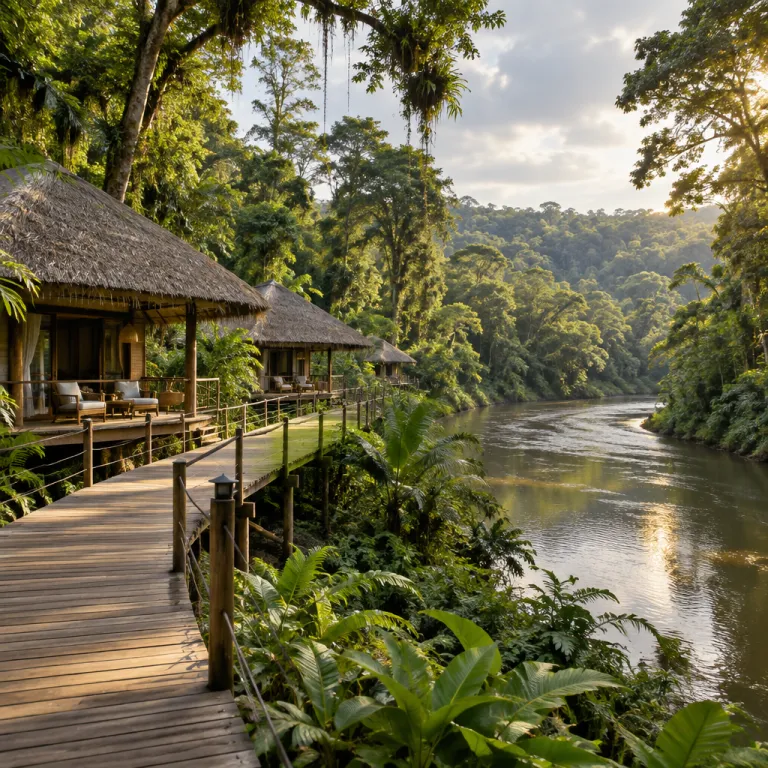
Parque Nacional Madidi for luxury travelers: where wilderness meets comfort
Parque Nacional Madidi is one of the most biodiverse protected areas in South America, and it offers a rare blend of raw jungle energy with discreet luxury. In this remote corner of Bolivia, the national park stretches from high Andean peaks down to the humid Amazon rainforest, creating a natural area where every change in altitude reveals new wildlife and new experiences. For people planning travel with premium comfort in mind, the main challenge is choosing how much time to spend deep in the Madidi jungle and how much to keep closer to refined services in Rurrenabaque.
The park itself forms part of a vast mosaic of Bolivian national parks and Áreas Naturales de Manejo Integrado (ANMI, Integrated Management Natural Areas), where conservation and carefully managed tourism coexist. Within this mosaic, Madidi National Park and its surrounding ANMI zones protect more than 18 000 square kilometres of rainforest, cloud forest, and river valleys, making Parque Nacional Madidi a flagship destination for Bolivia and for the wider Amazon rainforest according to Bolivia’s Servicio Nacional de Áreas Protegidas (SERNAP). Luxury travelers benefit from this scale because it allows curated itineraries that combine river journeys, jungle ecolodge stays, and comfortable overnights in town without sacrificing privacy or exclusivity.
Madidi Bolivia is accessed mainly through the small gateway town of Rurrenabaque, which has become a specialist hub for jungle ecolodge logistics and river expeditions. From here, boats follow the Beni River and then the Tuichi River into the heart of Bolivia Madidi, where the Parque Nacional Madidi boundaries begin to feel very real as mobile coverage fades and the jungle soundtrack takes over. A well designed itinerary balances boat travel time, the length of rainforest trails, and the comfort level of your chosen ecolodge, ensuring that each day feels immersive yet never exhausting.
Seasons, climate and the best time to stay in Madidi
Choosing the right season is crucial when planning a luxury stay in Parque Nacional Madidi, because climate shapes everything from river levels to wildlife visibility. The dry season, which generally runs from roughly May to October, brings clearer skies, more stable trails, and lower river levels, making it easier for people to walk longer distances in the rainforest without wading through deep mud. During this dry season, boat travel on the Tuichi River and other waterways is usually calmer, and many travelers find that the cooler nights pair well with higher end jungle ecolodge comforts such as hot showers and high quality linens.
The wet season, typically from about November to April, transforms the same national park into a lusher, more dramatic landscape, with intense greens and powerful river currents. In this wet season, some trails inside Madidi National Park can become slippery or temporarily inaccessible, but the rainforest feels especially alive, and certain wildlife species are more active or easier to spot near flooded forest edges. Luxury travelers who choose this time often prioritize ecolodges with strong integrated management planning, including raised walkways, robust river transport, and flexible day by day activity schedules that adapt quickly to changing conditions.
Because Parque Nacional Madidi lies within the broader Amazon basin, temperatures remain warm year round, but humidity and rainfall patterns shift sharply between seasons. When planning travel, consider how much time you want to spend on open boats along the river compared with shaded jungle trails, and discuss with your hotel or ecolodge how they handle both dry season and wet season logistics. For those combining Madidi Bolivia with other Bolivian highlights such as luxury stays in Santa Cruz de la Sierra, a refined city guide or specialist travel advisor can help you coordinate flights and connections so that your rainforest segment fits smoothly into a wider itinerary across the country.
From Rurrenabaque to the heart of Madidi: routes, rivers and refined logistics
Most journeys into Parque Nacional Madidi begin with a flight or overland trip to Rurrenabaque, a small town on the banks of the Beni River that functions as the main logistics base for the region. From La Paz, flights typically take around 40 minutes when operating, while overland routes can require 10 to 15 hours depending on road conditions. From Rurrenabaque, travelers board long wooden motorized boats that follow the Beni upstream before turning into the Tuichi River, where the official boundary of Madidi National Park gradually comes into view. This river based approach allows people to experience the transition from farmland to jungle in real time, with each bend revealing new forested slopes and the first glimpses of the Madidi jungle canopy.
For luxury and premium travelers, the key is to work with operators and hotels that understand both the river system and the specific needs of high end guests. Many upscale itineraries include a night in Rurrenabaque at a comfortable hotel before heading into the national park, allowing time to adjust to the climate and to have luggage carefully prepared so that only essential items are retrieved for the jungle segment. Some itineraries then combine several days at a jungle ecolodge deep inside Parque Nacional Madidi with a final night back in town, ensuring that guests can enjoy a hot shower, a refined dinner, and reliable Wi Fi before continuing to other Bolivian icons such as luxury stays around the Salar de Uyuni.
Boat travel times on the Tuichi River vary depending on the season, with faster currents in the wet season and slower, more meandering journeys in the dry season. Reaching lodges close to the park boundary can take around two hours, while more remote ecolodges may require four to six hours of river travel each way. In both cases, the river itself becomes part of the experience, with frequent stops to watch wildlife along the banks or to walk short rainforest trails that lead to viewpoints and natural swimming spots. When planning your travel time, remember that this is not a rushed transfer but a core part of the Parque Nacional Madidi experience, and that well managed itineraries build in flexibility for photography, wildlife watching, and unhurried meals along the way.
Staying inside Madidi: ecolodges, comfort levels and immersive experiences
Within Parque Nacional Madidi, accommodation focuses on ecolodges that blend comfort with low impact design, and the most renowned example is Chalalán Ecolodge. Chalalán Ecolodge is owned and operated by indigenous communities from San José de Uchupiamonas, and it sits beside a forest lined lagoon reached after several hours of river travel and a short walk through the jungle. For luxury travelers, this model offers both privacy and authenticity, with well appointed cabins, mosquito netting, and attentive service that respects the rhythms of the rainforest rather than imposing an urban hotel template.
Other jungle ecolodge options in Madidi Bolivia, such as San Miguel del Bala Ecolodge or Sadiri Lodge in the wider region, follow similar principles, using local materials, solar power, and integrated management practices to reduce their footprint while still providing comfortable beds, good food, and expert guiding. In these lodges, people typically spend each day exploring nearby trails, paddling on quiet stretches of river, or watching wildlife from observation towers, before returning to candlelit dinners and the sounds of the jungle at night. The emphasis is on quality rather than excess, so while you will not find marble lobbies, you will find carefully curated experiences that align with the expectations of premium travel while honouring the spirit of a protected national park.
When comparing ecolodges, consider how many guests they host at one time, how they manage waste and water, and how closely they work with local indigenous communities in both employment and decision making. A smaller jungle ecolodge with strong integrated management policies may offer a more exclusive atmosphere, with fewer people on each guided walk and more personalised wildlife viewing opportunities. Typical nightly rates for community based ecolodges, including meals and guided activities, often fall in the mid range to upper mid range for Bolivia, while private departures, specialist birding programs, or chartered boats can increase costs into a more clearly luxury bracket. In every case, staying inside Parque Nacional Madidi rather than commuting from town allows you to experience the rainforest at dawn and dusk, the two periods when many species are most active and when the forest feels at its most atmospheric.
Wildlife, rainforest trails and river based experiences in Madidi
Parque Nacional Madidi is celebrated for its extraordinary wildlife, with scientists having retrieved records of hundreds of mammal species, more than a thousand bird species, and countless insects and plants within its boundaries. This density of species is linked to the park’s dramatic range of altitudes and habitats, from high Andean grasslands down to lowland Amazon rainforest, making it one of the most important protected areas in South America according to long term monitoring projects by the Wildlife Conservation Society (WCS) and Bolivian researchers. For visitors, this means that even short walks along rainforest trails near a jungle ecolodge can reveal monkeys, macaws, leafcutter ants, and sometimes tapir tracks or the distant call of a jaguar.
Guided walks are usually organised in small groups so that people can move quietly and increase their chances of seeing wildlife, while also learning about medicinal plants, forest ecology, and the cultural significance of certain trees for indigenous communities. Many itineraries include both day walks and night walks, because some species are more active after dark, and the forest feels completely different when illuminated only by headlamps and moonlight. River based excursions on the Tuichi River or nearby streams complement these walks, offering chances to spot capybaras, caimans, and river birds from the comfort of a boat, with the national park landscape unfolding in wide panoramas.
For luxury travelers, the value lies in having highly trained local guides, comfortable boats, and flexible schedules that allow extra time when wildlife sightings become especially rewarding. Some ecolodges also offer specialised birdwatching or photography programs, which can be tailored to the dry season or wet season depending on migration patterns and nesting behaviour. Whether you are an experienced naturalist or simply curious, the combination of river journeys, rainforest trails, and carefully paced activities ensures that Parque Nacional Madidi delivers a rich yet unhurried immersion in one of Bolivia’s most remarkable national parks.
Culture, conservation and responsible luxury in Madidi Bolivia
Beyond its wildlife, Parque Nacional Madidi is home to several indigenous communities whose territories overlap with the national park and surrounding integrated management areas. These communities, including the Uchupiamona and Tacana peoples, play a central role in the management framework that governs tourism, conservation, and resource use in the region. When you stay at Chalalán Ecolodge or another community linked jungle ecolodge, your visit supports local livelihoods and reinforces the idea that high quality tourism can coexist with cultural continuity and environmental protection.
Responsible luxury in Bolivia Madidi means choosing operators who respect community decisions, pay fair wages, and involve local people in guiding, management, and long term planning. It also means accepting certain limits, such as small group sizes on trails, restricted access to sensitive areas, and seasonal adjustments when the wet season or dry season affects wildlife breeding or habitat conditions. These measures are not inconveniences but part of an integrated management approach that keeps Parque Nacional Madidi functioning as a living national park rather than a theme park, and they help ensure that future travelers can enjoy the same sense of remoteness and authenticity.
For travelers building a broader Bolivian itinerary, combining Madidi National Park with urban and culinary experiences can deepen your understanding of the country’s diversity. A refined exploration of Bolivian market halls in La Paz or Santa Cruz, for example, offers a vivid contrast to the jungle, with colours, flavours, and people that reflect different sides of the same nation. By aligning your choices with operators and hotels that prioritise conservation, cultural respect, and transparent management practices, you transform a stay in Parque Nacional Madidi from a simple trip into a meaningful contribution to one of the world’s most important protected areas.
How to choose and book luxury stays around Parque Nacional Madidi
Selecting the right accommodation for a high end journey to Parque Nacional Madidi starts with clarifying how deep into the jungle you wish to go. Some travelers prefer to base themselves mainly in Rurrenabaque, using comfortable hotels in town and booking long day trips into the national park, which reduces the need to pack light but limits sunrise and sunset experiences. Others choose a combination of one night in town and several nights at a jungle ecolodge such as Chalalán Ecolodge, accepting longer river transfers in exchange for more intimate contact with the rainforest and its wildlife.
When comparing options on a luxury and premium hotel booking website focused on Bolivia, pay attention to how each property describes its relationship with Parque Nacional Madidi and with nearby indigenous communities. Look for clear explanations of how waste is managed, how water is treated, and how staff are recruited and trained, because these details reveal whether integrated management principles are truly applied or only mentioned in passing. It is also wise to check how each lodge or hotel handles different times of year, asking specific questions about dry season and wet season operations, river safety, and contingency plans if trails become temporarily inaccessible.
Finally, consider how Parque Nacional Madidi fits into your wider Bolivian journey, which might also include refined city stays in Santa Cruz de la Sierra or high altitude adventures around La Paz and Lake Titicaca. Coordinating flights, transfer times, and minimum night stays through a specialised platform or dedicated travel consultant can reduce friction and ensure that each segment of your travel feels seamless rather than rushed. Entry permits for Madidi National Park are usually arranged by tour operators or ecolodges as part of the package, with fees paid locally and documentation handled on your behalf. By choosing properties and operators that align with conservation goals and community priorities, your time in Madidi National Park becomes not only a personal highlight but also a small yet tangible contribution to the long term protection of one of Bolivia’s most extraordinary national parks.
Key figures about Parque Nacional Madidi and Bolivian conservation
- Parque Nacional Madidi and its surrounding integrated management natural areas cover more than 18 000 square kilometres, representing one of the largest continuous protected areas in the tropical Andes according to Bolivia’s Servicio Nacional de Áreas Protegidas (SERNAP).
- Scientists have documented over 1 000 bird species in Madidi National Park, which means that this single park hosts a significant share of all known bird species worldwide, based on surveys by the Wildlife Conservation Society (WCS) and peer reviewed ornithological studies.
- Research in the broader Madidi region has identified more than 200 mammal species and thousands of plant species, making it one of the most biodiverse national parks on Earth according to analyses published in the journal Science Advances and related scientific literature.
- Community based tourism initiatives linked to Chalalán Ecolodge have generated sustainable income for indigenous communities in the region, contributing to reduced deforestation rates in surrounding forests as reported by conservation NGOs and long term monitoring projects in Bolivia.
- Bolivia’s national parks system includes more than 20 major protected areas, and Madidi is consistently ranked among the top priorities for long term conservation funding due to its exceptional concentration of Amazon rainforest and Andean ecosystems in official planning documents and international conservation assessments.
FAQ about luxury travel to Parque Nacional Madidi
How many days should I spend in Parque Nacional Madidi for a luxury trip ?
Most luxury travelers spend between three and five days in Parque Nacional Madidi, combining time in Rurrenabaque with several nights at a jungle ecolodge inside the park. This duration allows for unhurried river travel, multiple rainforest walks, and some flexibility for weather changes. Shorter stays are possible but may feel rushed given the travel time required to reach the Tuichi River and the core areas of Madidi National Park.
Is Parque Nacional Madidi safe for high end travelers ?
Parque Nacional Madidi is generally safe for visitors who travel with reputable operators and follow guide instructions, especially regarding river safety and wildlife distances. Luxury focused lodges and hotels typically maintain higher standards of equipment, communication, and emergency planning, which adds an extra layer of security. As with any remote natural area, it is important to have appropriate travel insurance and to share your itinerary with a trusted contact before departure.
What is the best season for wildlife viewing in Madidi National Park ?
Wildlife can be seen year round in Madidi National Park, but many guides prefer the dry season because trails are easier to walk and river levels are more predictable. During this time, animals often concentrate near remaining water sources, which can improve viewing opportunities along rivers and forest edges. The wet season also offers excellent sightings, especially of bird species, but activities may need to be adjusted more frequently due to rain and high water.
Can I combine Parque Nacional Madidi with other luxury destinations in Bolivia ?
Yes, Parque Nacional Madidi combines well with other Bolivian highlights such as La Paz, Lake Titicaca, Santa Cruz de la Sierra, and the Salar de Uyuni. Many travelers fly from La Paz to Rurrenabaque for the rainforest segment and then continue to Uyuni or Santa Cruz for contrasting landscapes and urban comforts. Working with a specialised luxury and premium hotel booking website helps coordinate flights, transfers, and minimum night stays across these very different regions.
Do I need special vaccinations or permits to visit Parque Nacional Madidi ?
Visitors to Parque Nacional Madidi usually need a standard entry permit, which is often arranged by tour operators or ecolodges as part of the package. Health recommendations, including vaccinations and malaria prevention, depend on your medical history and current public health guidance, so you should consult a travel medicine clinic several weeks before departure. Carrying proof of yellow fever vaccination may be advisable for some itineraries within Bolivia, but requirements can change, so always verify current regulations with official health authorities.